





|
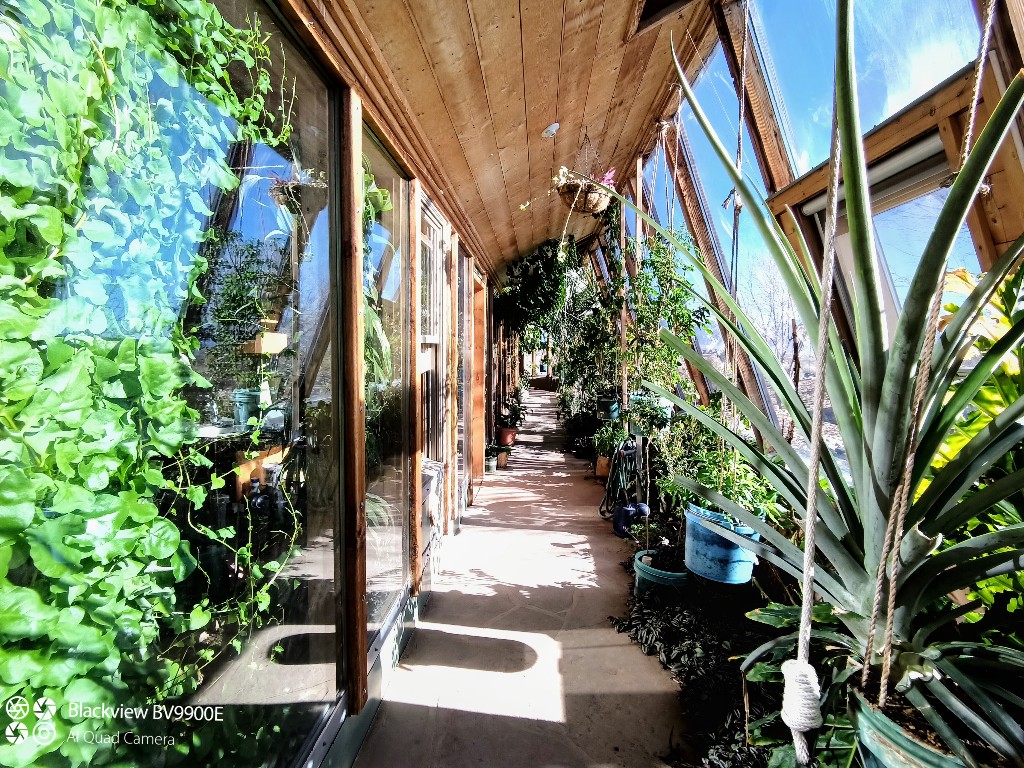
A fundamental concept of Earthships is that gray water from the sink or tub is recyled and purified by feeding into an indoor planter before being used to flush the toilet. Earthship create an environment in which plants are not only asthetic and contributing to the heath of our environment, but are also highly functional and play a direct role in the maintenance of the home. Having plants that produce food within this environment makes sense and takes sustainable and independent living to another level. |
![]() |
||||||||
|
Growing food in an Earthship is all about your own personal desires and lots of investigation. When deciding what to grow, pick those plants that interest you and research the varieties. If there is a particular plant you definitely want in your home, experiment a little and plant two of them in varying conditions. The results will depend on a variety of factors: the amount of sunlight/shade the plant recieves, the soil quality or the plants they are situated next to (for a great reference on companion planting see "Carrots Love Tomatoes: Secrets of Companion Planting for Successful Gardening" by Louise Riotte). Often you can get quite different results even when plants are within five feet of one another. |
A New Age of Greenhouse Management:
|
||||||||
|
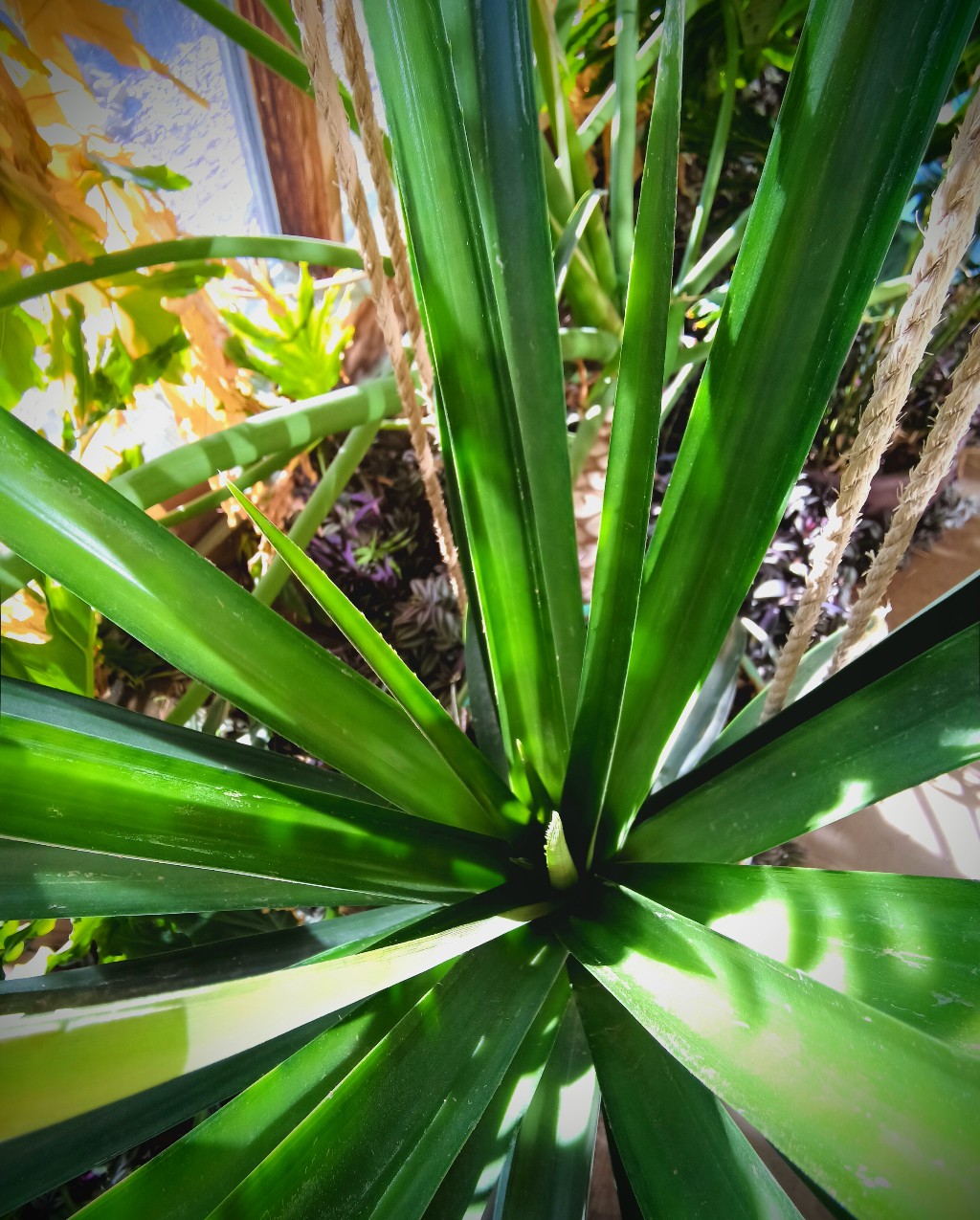
A prime example are two Dracaena plants, often called "Spikes" in plant nurseries, that were planted at the Phoenix at the same time. One plant is shaded for approximately 2.5 hours more than the other, and it has grown to over five feet within two years; while the other plant hasn't surpassed three feet. |
|
||||||||
|
As far as banana trees, which are highly popular for Earthship planters, buy only dwarf banana trees. These can still reach a height of 12-15 feet, can handle most light conditions, and bear fruit at a young age. |
|
||||||||
|
If you are short on planter space, you can create some extra growing capacity by simulating small planters in the form of buckets hung from the ceiling. Each bucket, like a planter, starts with a 4” layer of gravel, then sand and finally soil. To achieve the entry of water at a low level as with planters, insert a PVC tube that rises slightly above the soil level and extends down into the gravel. The PVC tube will allow you to "bottom water" the planter bucket, which will encourage the roots to reach the water and grow more quickly. |
![]() |
||||||||
|
For best results, it is advisable to use a neutral or slightly acidic soil in your planter. The majority of plants, including food producing plants, prefer the soil to hover between 7.4-6.0 on the pH scale. Inexpensive, easy to use, pH test kits are available at most garden supply stores, where you can also get any amendments you may need to adjust your soil's pH. The only time you should use sterilized soil is if you know you have soil-born harmful insects (such as cutworm) or disease (such as blight or powdery mildew) present in your soil, and you are trying to germinate seeds, or starting young plants. |
|||||||||
|
|||||||||
First Aquaponics Salad from Earthship Biotecture Visitor Center
Written by Michelle Locher
February 20. 2013, I made our first AQUAPONIC salad from lettuce, tomatoes and herbs, growing in our Aquaponic system.
This Aquapocic System was built on 9 and 10 October 2012, by James Fry, an Earthship Academy student from 2012, as his independent field study.
Follow him on GrowEverywhere.com/aquaponics, and also see our article Earthship Installs First Aquaponics System at HQ
Amazing cucumber plant in a suspended growing bucket in our Earthship Visitors Center
Written by Michelle Locher
This cucumber plant is growing in a suspended growing bucket near the west side door in our Earthship Visitors Center greenhouse. The plant is three to four months old and has yielded 23 large cucumbers to date, and is still going strong!
Three large eight inch cucumbers were picked about 10 days ago. Today, 11/26/12, I picked 13 eight inch cucumbers, which are on display at our Earthship Visitors Center for the day. All the employees here today, will be able to take a cucumber home for dinner.
A New Age of Greenhouse Management Predatorial Insects within the Greenhouse
Written by Jeane NardoneContributed to by Daniel Dynan
As discussed in our last greenhouse management article (A New Age of Greenhouse Management: The onset of Earthship greenhouses and their necessity as a household utility), it was explained that the greenhouses in Earthships require a different level of participation than that of traditional greenhouse management. The planters function to provide the Earthship’s inhabitants with food but also cleans the water that cycles through. The planters serve as the household’s utilities. While there is a heightened level of involvement within the greenhouse, there are still challenges. Host insects are an obstacle that we have experienced in our Earthship’s greenhouses. The plants in the greenhouse are subject to various different host insects that can cause damage or kill plants if the state is serious enough.
Earthship installs first Aquaponics system @ HQ
Written by Jeane Nardone
Photo Credit: Dan Dynan
“My mission is to empower people to provide for themselves.” – James Fry
This past weekend, Earthship incorporated another permacultural practice into its headquarters’ education facility. The Visitor Center serves to showcase the base fundamentals and principle concepts to the public on a daily basis. There is information, books, an extensive greenhouse, videos, pictures and now, an aquaponics system. From our summer academy session, James Fry took the initiative to share his knowledge and experience building these systems and has given a 2-hour, hands-on class to two academy groups. This time around, he decided to move forward and do an entire workshop building this system start-to-finish with 10 academy students and some staff to ensure that the system would be maintained properly.
The onset of Earthship greenhouses and their necessity as a household utility.
contributed by
Jeane Nardone, Michelle Locher & Dan Dynan
photo: Dan Dynan
Earthship structures and the developmental creation of these buildings transcend the typical practice of greenhouse management. These greenhouses fill the gap between greenhouses as a hobby and commercial greenhouses. The onset of Earthship structure transforms greenhouse management from a hobby to practicality. They have advanced themselves into a necessity in these households in order to maintain utilities. This will require a new kind of participation to keep grey water clean, the septic system healthy, to maximize your water usage and for food production. In the Greater World Community, we are constantly trying to create a better, more passive toolbox for what is needed to keep greenhouses healthy – to keep us healthy.
Earthships on the Travel Channel, Monday July 30th!
9pm eastern | 8pm central
Bizarre Foods with Andrew Zimmern
Andrew Zimmern comes to New Mexico where the frontier spirit can still be found, even when it comes to the food!
Andrew goes out hunting buffalo on horseback and learns to roast prairie dogs with members of a Pueblo tribe, but he also meets modern day pioneers living inside futuristic homes that produce fresh ingredients for every meal.
From fresh buffalo sliced buffalo heart, to menudo made the old fashioned way, to a matanza celebration featuring blood pudding and fried pig skin, Andrew explores the many layers of flavors from the past and present that can be found in this southwestern state!
Growing food in black water planters for the Earthship homeowner
Written by Michelle LocherSpring 2011 I had sown too many seeds to plant in the indoor grey water planters and the suspended food growing buckets. Being a plant lover I could not let the extra starts die, so I planted them in the only other place they would be able to grow out here on the High Desert Mesa, the Visitors Center black water planter. The black water planter is a contained out door botanical cell located between the septic tank and the leach field. Here, black water planters usually have cold hardy ornamentals such as red willows, cold hardy fruit trees such as winter pear and apple, and wild flowers growing, providing a habitat and food source for wild birds and small animals out here on the Mesa.
by Annie Warmke
of Blue Rock Station - Earthship Ohio
Earthship wetlands, the planters that hold hundreds of gallons of water from sinks and the shower are a great place for raising some of the fresh produce you’d like to have in the winter, but find expensive or bland tasting from the supermarket. At Blue Rock Station in southeast Ohio we have learned a few tricks for using our wetlands to compliment our lives.
New images of the animals and food at the Phoenix Earthship
Written by Earthship BiotectureNew food images posted from the Phoenix Earthship in Taos, NM at 7,200 feet.
Lady bugs, frogs, birds and bugs...
Artichoke, bananas, flowers, chile, peppers, lettuce, spinach, tomatoes... Grow all your own food. organic, healthy natural food still living when you eat it.
What plants do we have in our Earthships here on the Community?
Here is a sample list of some that are growing in the offices that are low maintenance and hearty:
Earthship Malawi, Africa.


6/11/2013